
For years, America’s biggest banks stood together in pushing regulators to ease capital requirements. That unity is now breaking down as the Federal Reserve moves closer to completing a major overhaul.
JPMorgan, Bank of America, Goldman Sachs and Morgan Stanley now have competing interests over one proposed change to the capital surcharge applied to the country’s largest global banks.
The dispute centers on how the Fed would measure short-term wholesale funding, including repo and commercial paper. The change could shift billions of dollars in capital relief among the four institutions.
As a result, banks that once shared the same regulatory goal are now pressing the Fed in different directions.
Why the Capital Surcharge Matters
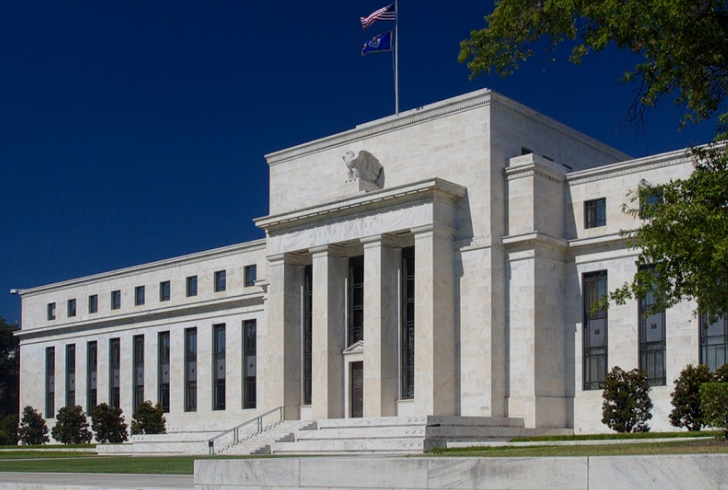
Instagram | federalreserveboard | The Federal Reserve imposes extra capital requirements on major U.S. banks to mitigate broader systemic risk.
The Federal Reserve applies an additional capital requirement to global systemically important U.S. banks, commonly known as GSIBs. The surcharge was created after the 2007–2009 financial crisis to account for risks tied to banks whose failure could have broader effects on the financial system.
Bank capital affects how much a lender can put toward loans and trading activities. It also influences how much money can be returned to shareholders. Lower capital requirements can therefore give banks more room to lend, trade or distribute funds.
In March, the Fed proposed changes designed to make the GSIB surcharge more sensitive to different types of risk. One major adjustment would change the way regulators calculate short-term wholesale funding.
The proposal has created a sharp divide among the four major banks.
Billions in Potential Relief
JPMorgan and Bank of America rely more heavily on deposits for funding than Goldman Sachs and Morgan Stanley. The latter two banks make greater use of short-term wholesale funding.
That difference matters under the Fed’s proposed formula.
In a June letter to the central bank, JPMorgan estimated that the funding change could reduce its potential capital relief by about $13 billion. Bank of America could miss out on roughly $9 billion, according to JPMorgan’s estimate.
Goldman Sachs and Morgan Stanley, by contrast, could each receive an additional $1 billion to $2 billion in capital relief under the proposed adjustment.
Washington-based advocacy group Better Markets reached a similar conclusion, saying Goldman Sachs and Morgan Stanley would receive the largest benefit from the change.
The numbers explain why the banking industry’s united front has weakened just as the Fed approaches the final stage of its rulemaking process.
JPMorgan and BofA Push Back
Instagram | peoplematters | JPMorgan and Bank of America are actively lobbying Fed regulators to reject new funding adjustments.
JPMorgan and Bank of America have urged Fed officials to reject the proposed funding adjustment. The banks have held meetings with regulators, including joint discussions, according to people familiar with the matter.
Their argument centers on how the new formula could influence bank behavior. JPMorgan and BofA contend that the change could make trading activities more attractive from a capital standpoint while placing pressure on traditional lending.
JPMorgan business banking chief Stevie Baron made that point in a recent blog post.
“As proposed, the Federal Reserve would incentivize trading activity over lending to small businesses and customers,” Baron wrote.
The banks also argue that the approach could restrict lending and potentially affect the broader economy. Bank of America said it supports regulatory changes that “drive Main Street lending, job creation, and affordability.”
That position fits with the Trump administration’s broader argument for reducing regulatory burdens on banks: freeing capital should encourage lending to businesses and consumers.
Goldman Sachs, Morgan Stanley Back Change
Goldman Sachs and Morgan Stanley have taken the opposite position. Both banks have urged the Federal Reserve to move ahead with the proposed adjustment.
Their comment letters argue that the new method would provide a better measure of funding risk. Goldman Sachs said the approach “would result in a more transparent and economically grounded measure.”
Morgan Stanley has been especially active in supporting the funding change, according to people familiar with the discussions. The bank argues that lower capital requirements for certain Treasury market activities could improve liquidity in the market for U.S. government debt.
That matters beyond Wall Street. Treasury yields influence borrowing costs across the economy, including rates connected to loans and other forms of credit.
The competing arguments leave the Fed balancing two different concerns: whether the rule better reflects actual funding risk and whether it could create incentives that shift banks away from lending.
How the Formula Could Change
The dispute stems from how the Fed currently measures short-term wholesale funding.
Under the existing system, the Fed calculates the measure as a ratio tied to risk-weighted assets. The method was intended to make comparisons between large banks more consistent. However, that calculation has pushed the funding factor to roughly 30% of the overall GSIB surcharge calculation.
The proposed system would remove that ratio and instead measure a bank’s absolute short-term wholesale funding exposure.
That change would favor banks with relatively high levels of such funding.
Federal data from 2026 show the difference among the four institutions. Short-term wholesale funding represented about 37% of Morgan Stanley’s liabilities and 30% of Goldman Sachs’ liabilities. The figures were lower for Bank of America at 24% and JPMorgan at 21%.
Those numbers help explain the sharp split over the proposal.
Years of Pressure Led to This Point
The current disagreement follows years of cooperation among GSIBs. Banks had long argued that the surcharge was too strict and did not measure risk accurately.
The push gained momentum after the Federal Reserve began a broader review of capital rules in 2022. The banking industry responded with a strong and unusually unified campaign against tighter capital requirements.
That pressure eventually contributed to the Fed proposing changes to the GSIB surcharge along with broader capital relief.

Instagram | gupsaroscenter | Fed Vice Chair Bowman requested banks limit additional feedback prior to a year-end decision.
Now, however, the banks face a different problem. A rule that helps one institution may hurt another.
Christopher Appel, director of banking policy at Better Markets and a former Fed official who worked at the central bank from 2019 through March, described the choice facing regulators simply:
“They’re going to have to choose.”
Appel said the GSIB surcharge remains an important safeguard as regulators consider lower capital requirements. He also argued that the proposed revision could provide a better measure of funding risks.
“It’s absolutely critical that the Fed get this right.”
Fed Faces a Tight Deadline
The final decision could come before the end of the year. Fed Vice Chair for Supervision Michelle Bowman has asked banks to limit additional feedback, Reuters reported.
Three people familiar with the matter said they expect Bowman to remain close to the current draft, partly because she wants the rule completed by year-end. JPMorgan and Morgan Stanley executives have each met with Fed officials at least four times since March to discuss the GSIB proposal, according to public Fed meeting records.
The timing adds another layer of pressure. Democrats are expected to gain control of the House of Representatives next year and could increase scrutiny of financial regulators under the Trump administration.
Representatives for the Federal Reserve, JPMorgan, Goldman Sachs and Morgan Stanley declined to comment on the dispute.
The proposed GSIB surcharge has exposed a clear divide among the four banks. JPMorgan and Bank of America oppose the funding change, while Goldman Sachs and Morgan Stanley support it.
The Federal Reserve must now determine whether the revised calculation provides a fair measure of risk. Its decision could affect the capital available for lending, trading and shareholder payouts at some of the nation’s largest banks.
