
Financial advice is only a few swipes away on TikTok, Instagram, YouTube, and Facebook. Millions of people now watch short videos about stocks, budgeting, trading, and wealth building. A new study, however, raises questions about who is actually qualified to give that advice.
Fintech legal advisory firm Legalaes reviewed 1,764 English-language financial videos across YouTube Shorts, Instagram Reels, Facebook Reels, and TikTok. Together, those videos collected more than 692 million views and nearly 35 million likes.
The research covered 1,266 individual creators. Only 2.2% had clear professional credentials such as Certified Financial Planner (CFP), Chartered Financial Analyst (CFA), or Certified Public Accountant (CPA) qualifications.
What Is a “Finfluencer”?
“Finfluencer” combines “financial” and “influencer.” The term describes online creators who discuss personal finance, investing, trading, business, and wealth management.
Traditional financial professionals operate under rules set by financial regulators. In the United States, that includes agencies such as the Securities and Exchange Commission (SEC). The United Kingdom has the Financial Conduct Authority (FCA), while Canadian securities regulation involves provincial commissions.
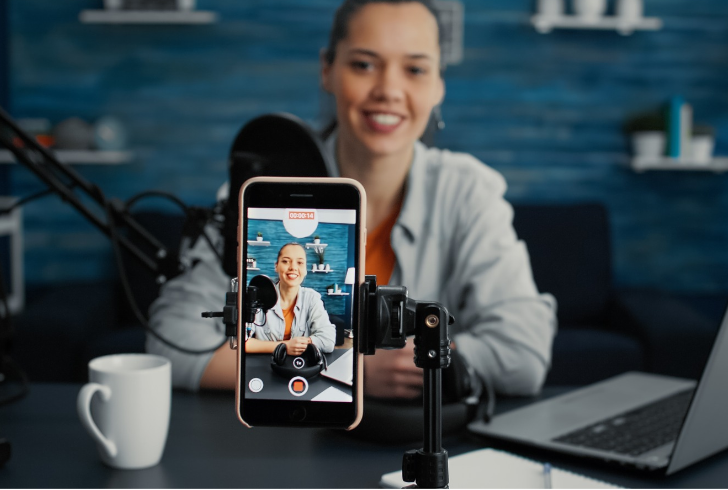
Freepik | A "finfluencer" is an online creator who shares advice and content on personal finance, investing, and wealth management.
Finfluencers work differently. Social media platforms allow creators to share financial opinions with large audiences without necessarily holding professional financial credentials.
Some creators have built audiences that rival established media outlets. Among the prominent names examined in the wider discussion around financial content are Erika Kullberg, Mark Tilbury, Graham Stephan, Vivian Tu, and Humphrey Yang.
Big Audiences, Different Backgrounds
Erika Kullberg has more than 9 million TikTok followers and over 4 million YouTube subscribers. She holds a Juris Doctor from Georgetown Law and has legal credentials, but she does not hold a financial planning designation.
Mark Tilbury has more than 7 million TikTok followers and over 4 million YouTube subscribers. He left school at 16 and later built wealth through business. He does not have a formal higher education degree or financial license.
Graham Stephan has more than 4.5 million subscribers on his main YouTube channel. His background includes working as a licensed real estate agent from age 18 and building experience through property investment.
Vivian Tu, known online as “Your Rich BFF,” has more than 4 million TikTok followers and over 2 million Instagram followers. She studied public policy and environmental studies before working as an equity trader at JPMorgan Chase. Her experience includes Wall Street trading, although she does not hold individual financial planning certifications such as a CFP.
Humphrey Yang, known as “Humphrey Talks,” represents a different path. He previously worked as a licensed financial advisor and held FINRA Series 7 and Series 66 securities licenses before moving into full-time content creation.
These backgrounds show why audience size and professional qualifications are not the same thing. A creator may have business experience, investment experience, legal training, or industry knowledge without holding a credential designed specifically for personal financial planning.
Misleading Videos Get More Attention
The Legalaes study found a notable difference between accuracy and engagement. About 29% of the videos contained misleading information.
Researchers included several types of content in that category. Examples included paid product promotions, promises of specific investment returns, fixed investment amounts, and inaccurate financial advice.
Misleading videos also attracted more views on average. They received about 555,547 views per video, compared with 326,170 views for videos that were not classified as misleading.
Financial disclaimers were uncommon as well. Only 11.7% of the videos included a financial disclaimer either on screen or in the creator’s profile bio.
The research also found that 1.9% of posts offered potentially damaging advice, while 1.1% contained factually inaccurate claims.
YouTube Shows a Mixed Picture
Platform results varied sharply.
YouTube Shorts had the highest share of videos classified as misleading at 41.8%. Instagram Reels followed at 26.8%, while Facebook Reels recorded 23.3% and TikTok 23%.
At the same time, YouTube had the highest percentage of content that researchers considered accurate. About 38.3% of its videos were based on established investment principles.
The study linked part of that difference to creator qualifications. About 5.1% of YouTube creators in the sample had relevant credentials. That compared with 1.6% on Instagram, 1% on Facebook, and 0.7% on TikTok.
YouTube also showed a strong connection between qualifications and monetization. Among qualified creators on the platform, 32.8% promoted paid products or services.
Trading Content Carries More Risk

Freepik | "Trading Tips and Technical Analysis" proved the riskiest financial category, with 40.6% of videos flagged as misleading.
The subject of a financial video also mattered. “Trading Tips and Technical Analysis” ranked as the riskiest category in the study.
About 40.6% of videos in that category were flagged as misleading. Only 9.8% were considered accurate financial advice.
The numbers changed for broader educational subjects. “Financial Literacy Education” had an accuracy rate of 57.8%, while “Stock Market Basics” reached 45.4%.
Short-term trading content also showed limited professional representation. Less than 1% of creators producing this type of advice had relevant professional credentials.
Commercial interests appeared frequently in the same category. Around 36.4% of creators used their videos to promote premium products, software, or paid community memberships.
Popularity Does Not Confirm Expertise
Social media can make financial concepts easier to understand. Short videos can explain budgeting, investing terms, market basics, and other topics in a format that reaches people who may not read traditional financial material.
The problem starts when popularity becomes a substitute for qualification.
A large follower count does not confirm that a creator can provide regulated personal financial advice. The same applies to impressive investment results, business success, or experience in a related industry.
Before acting on financial content, viewers can check several details:
1. The creator’s professional credentials
2. Any financial or business interests connected to the advice
3. Disclosures about paid products or sponsorships
4. Whether claims include realistic limitations rather than guaranteed returns
5. Whether the information applies to the viewer’s own financial situation
For major investment decisions, professional financial guidance can provide a different level of oversight than general social media education.
The Legalaes study shows that financial content can reach millions of people even when creators have limited formal financial credentials. Only 2.2% of the 1,266 creators reviewed held qualifications such as CFP, CFA, or CPA designations.
The findings also show why viewers should look beyond follower counts and video engagement. Checking a creator’s credentials, disclosures, and the basis for their financial claims can provide useful context before making an investment decision.
